
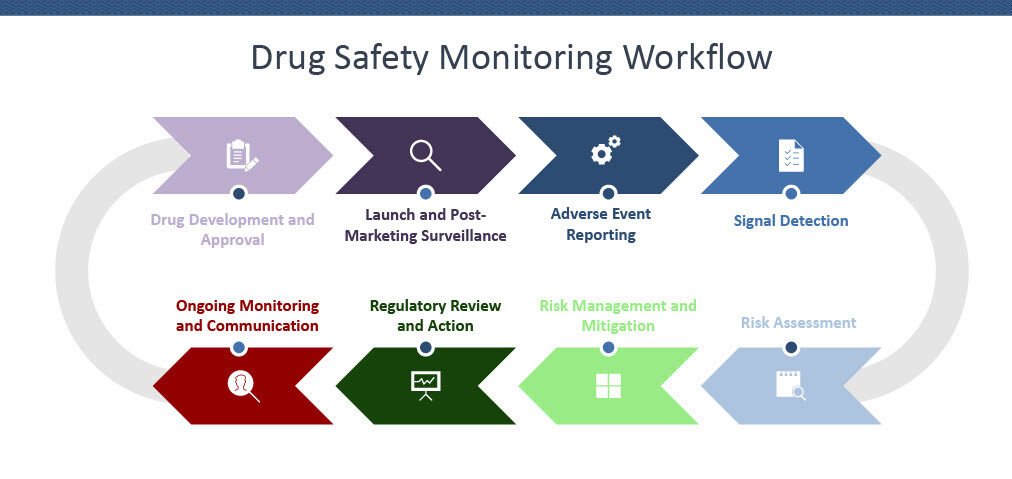
Safety data generation is the backbone of pharmacovigilance, ensuring that medicines remain safe from early discovery through real-world use. Modern drug regulation relies on a continuous flow of safety information generated during preclinical testing, clinical trials, and post-approval monitoring. These activities are globally harmonized through International Council for Harmonisation (ICH) guidelines, which provide a common framework for safety reporting, pharmacovigilance planning, and good clinical practice. Together, they support informed regulatory decisions and protect patient health worldwide.
Download UNIT 4 –Safety Data Generation and ICH Guidelines Notes
Get simplified revision notes for this unit:
⬇️
Download Unit 4 Notes PDF
Preclinical Phase: Laying the Safety Foundation
Safety data generation begins in the preclinical phase, long before a drug is tested in humans. This phase involves laboratory and animal studies designed to identify toxicological profiles, target organ toxicity, genotoxicity, reproductive toxicity, and carcinogenic potential. These studies help determine a safe starting dose for first-in-human trials and identify potential risks that require monitoring later.
Although preclinical data cannot predict all human adverse effects, it provides critical early warnings. Regulatory authorities depend on this information to decide whether a compound is suitable to progress into clinical development.
Clinical Phase: Structured Safety Evaluation in Humans
During the clinical phase, safety data is generated systematically across Phase I, II, and III trials. Phase I studies focus on tolerability and dose-related adverse effects in healthy volunteers or patients. Phase II trials expand safety evaluation while exploring efficacy, and Phase III trials provide broader safety data across diverse populations.
Clinical safety data collection follows Good Clinical Practice (GCP) standards, ensuring accurate recording and timely reporting of adverse events and serious adverse events. This phase forms the core evidence used for benefit–risk assessment at the time of marketing authorization.
Post-Approval Phase (Post-Marketing Surveillance – PMS)
Once a drug is approved and widely used, post-approval safety monitoring becomes essential. Post-marketing surveillance (PMS) captures rare, delayed, or population-specific adverse effects that may not appear in clinical trials.
PMS relies on spontaneous reporting systems, observational studies, registries, and regulatory safety reviews. Continuous safety data generation during this phase ensures that regulatory actions—such as label updates, risk minimization measures, or product withdrawal—are based on real-world evidence.
ICH Guidelines for Pharmacovigilance
Organization and Objectives of ICH
The International Council for Harmonisation (ICH) was established to harmonize technical requirements for pharmaceutical product registration across major regulatory regions. Its primary objective is to improve efficiency in drug development and regulation while maintaining high standards of quality, safety, and efficacy.
ICH pharmacovigilance guidelines provide a globally accepted framework for safety data collection, reporting, and evaluation, enabling consistent regulatory practices across countries.
Expedited Reporting: Rapid Communication of Serious Risks
Timely Safety Information for Regulators
Expedited reporting refers to the rapid submission of serious and unexpected adverse reactions to regulatory authorities. These reports are critical for early detection of significant safety risks and prompt regulatory action.
Expedited reports are required during both clinical development and post-approval phases, ensuring that emerging risks are communicated without delay.
Individual Case Safety Reports (ICSRs)
Core Unit of Pharmacovigilance Data
An Individual Case Safety Report (ICSR) is a detailed record of a suspected adverse reaction in a single patient. ICSRs include information on the patient, drug exposure, adverse event description, outcome, and reporter details.
ICSRs form the basic building blocks of pharmacovigilance databases. When analyzed collectively, they support signal detection and safety trend analysis at national and global levels.
Periodic Safety Update Reports (PSURs)
Continuous Benefit–Risk Evaluation
Periodic Safety Update Reports (PSURs) provide a structured summary of worldwide safety data for a medicinal product over a defined period. Rather than focusing on individual cases, PSURs evaluate cumulative data to reassess the product’s benefit–risk balance.
Regulatory authorities use PSURs to determine whether additional risk management measures or regulatory actions are necessary.
Post-Approval Expedited Reporting
Maintaining Vigilance After Market Entry
Even after approval, certain serious adverse reactions must be reported on an expedited basis. Post-approval expedited reporting ensures that newly identified risks are communicated promptly, supporting timely regulatory intervention and patient protection.
Pharmacovigilance Planning
Proactive Risk Management
Pharmacovigilance planning involves identifying known and potential risks and outlining strategies to monitor and minimize them throughout a product’s lifecycle. Risk management plans describe planned pharmacovigilance activities, additional studies, and risk minimization measures.
Effective planning shifts pharmacovigilance from a reactive to a proactive discipline.
Good Clinical Practice in Pharmacovigilance Studies
Ensuring Ethical and Scientific Integrity
Good Clinical Practice principles extend beyond clinical trials into pharmacovigilance studies. They ensure that safety data is collected ethically, accurately, and reliably, with respect for patient rights and data integrity.
Regulatory authorities such as the Food and Drug Administration (FDA) and the European Medicines Agency (EMA) enforce GCP-aligned pharmacovigilance standards to maintain global consistency.