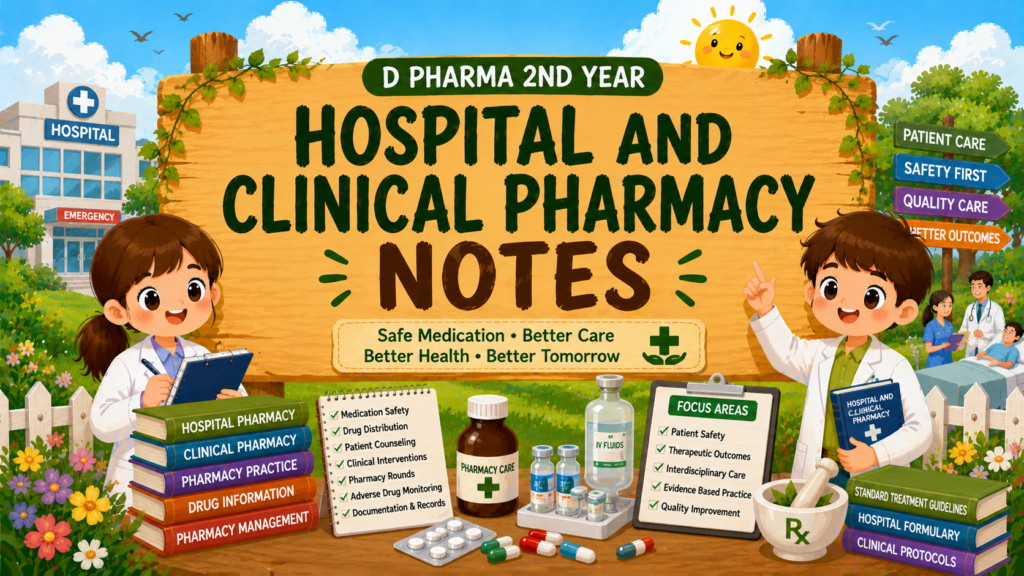
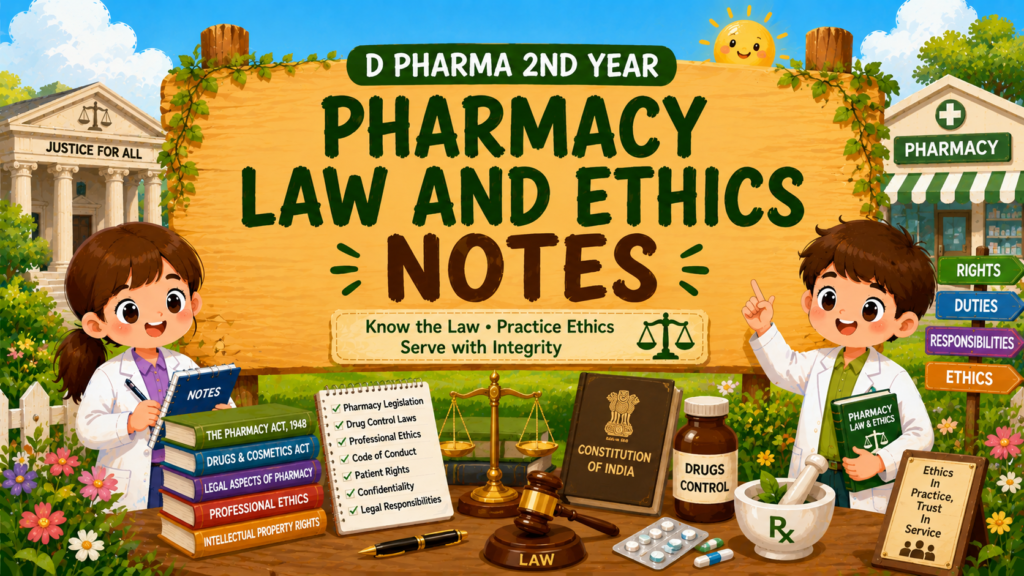
After building the fundamentals in the first year, D Pharma 2nd Year takes you deeper into the practical and clinical side of pharmacy education. At this stage, students move beyond introductory concepts and begin learning how medicines are used in disease management, patient care, hospital practice, and pharmaceutical operations. The subjects become more application-based and closely connected to real healthcare situations.
These notes are organized according to the current diploma pharmacy syllabus and arranged in a clear unit-wise format to support easier learning and revision. The second year is especially important because it strengthens both theoretical understanding and professional skills required in pharmacies, hospitals, and healthcare settings.
What to Expect in D Pharma 2nd Year?
The second year of Diploma in Pharmacy is more focused on the practical use of medicines, patient care, and professional pharmacy responsibilities. After learning the basic pharmaceutical sciences in the first year, students now begin to understand how drugs are selected, dispensed, managed, and monitored in real healthcare environments.
This stage introduces subjects that deal with pharmacology, hospital pharmacy, community pharmacy, drug laws, and medication management. Students learn how medicines affect the body, how prescriptions are handled in clinical settings, and how pharmacists contribute to safe and effective healthcare services.
The academic approach in the second year becomes more application-oriented. Along with theory classes, practical training helps students improve dispensing skills, prescription interpretation, patient communication, dosage calculations, and pharmacy management techniques.
Subjects Covered in D Pharma 2nd Year
Click on any subject button below to access full notes:
Importance of D Pharma 2nd Year
The 2nd year of Diploma in Pharmacy is the phase where students begin transforming their foundational knowledge into practical pharmacy understanding and professional healthcare skills. While the first year focuses mainly on basic sciences and pharmaceutical concepts, the second year emphasizes the real-life application of medicines in hospitals, clinics, and community pharmacy settings.
This year is important because students start learning about drug actions, disease treatment, prescription handling, patient safety, and the legal responsibilities involved in pharmacy practice. Subjects related to pharmacology, hospital pharmacy, community pharmacy, and pharmaceutical jurisprudence help students understand how pharmacists contribute directly to patient care and healthcare systems.
D Pharma 2nd Year also strengthens communication skills, dispensing accuracy, clinical awareness, and ethical decision-making. Students gain a clearer understanding of how medicines should be stored, prescribed, dispensed, and monitored for safe therapeutic outcomes.
What Will You Learn in D Pharma 2nd Year? (Subject-wise Overview)
The second year of D Pharma is where pharmacy education becomes more connected to real patient care, medication use, and professional pharmacy practice. Instead of focusing only on the basics of medicines and formulations, students now begin understanding how drugs are used in treatment, how pharmacies operate, and how pharmacists contribute to healthcare services.
During this academic year, students generally study the following major subjects in detail:
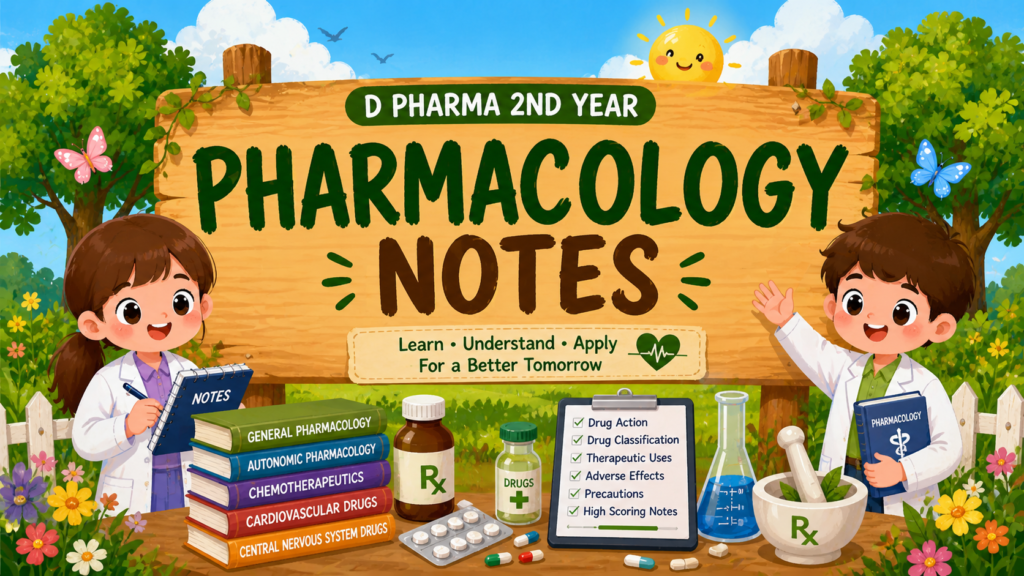
1. Pharmacology and Toxicology
This subject explains how drugs act on the human body and how different medicines are used in the treatment of diseases. Students also learn about side effects, drug toxicity, poisoning, and emergency management.
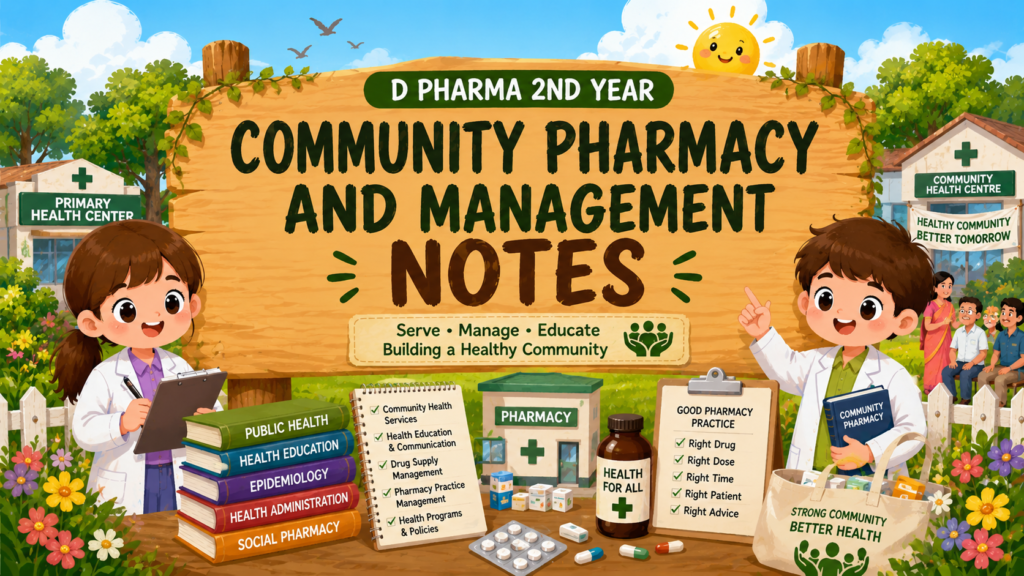
2. Community Pharmacy and Management
This subject focuses on the pharmacist’s role in society, patient counseling, healthcare awareness, medication guidance, and management of community pharmacy services.
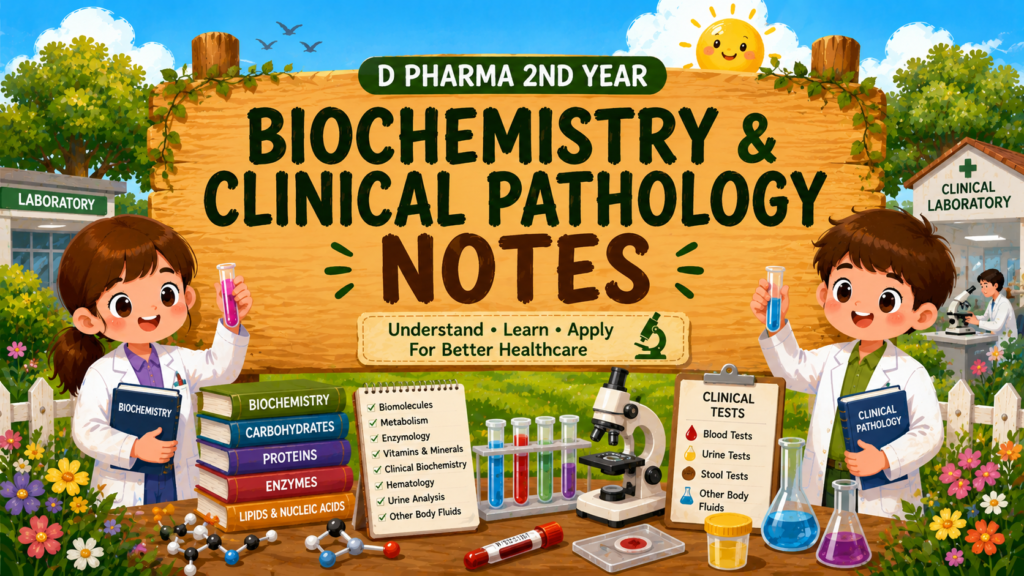
3. Biochemistry & Clinical Pathology
This course introduces the study of chemical reactions and metabolic processes occurring within the human body. Students explore the biochemical roles of carbohydrates, proteins, lipids, and nucleic acids, along with clinical pathology metrics used to analyze blood and urine samples for disease diagnosis.
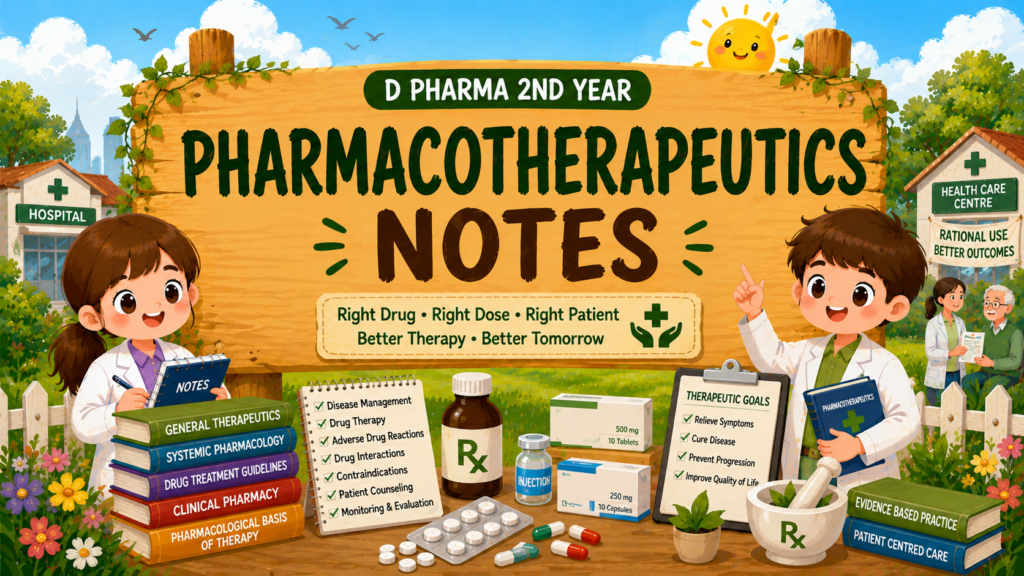
4. Pharmacotherapeutics
This critical subject bridges the gap between pharmacology and clinical practice. Students learn about the pathophysiology of common medical conditions and the selection of appropriate drug regimens to achieve safe and optimal patient outcomes.
5. Hospital and Clinical Pharmacy
Focuses on the internal operations of hospital pharmacy departments, including specialized drug distribution systems, managing institutional supply lines, clinical drug interaction tracking, and interprofessional healthcare collaboration.
6. Pharmacy Law and Ethics
Details the vital legal boundaries, acts, and ethical rules governing pharmacy practice in India, including comprehensive compliance standards for the manufacture, distribution, sale, and dispensing of medications.